My very first 13a build was based on a rough copy that was offered to me. I only ever built one, and it’s now gathering dust. The sound was very acceptable, but it didn’t impress and was actually inferior to the 12a horn, at least to my ears.
That came as a surprise, because in theory the design should have produced a smoother, more extended sound, as dictated by the fundamental laws of physics. The discrepancy prompted closer scrutiny, and it quickly became apparent that the issue lay not in the concept but in its execution. Detailed examination showed that the dimensions of the patterns I had been offered had strayed, oddly, from the original design, to a degree sufficient to alter the system’s expected acoustic behaviour. This anchored my belief that only the original horn expansion is acceptable, because those working in the 1920s clearly understood what they were doing and the acoustic outcomes they sought to achieve.
I still do not know what reference was used for these patterns, and when I asked, no clear answer was given. That lack of transparency was difficult to ignore. The patterns may have originated from an intermediate drawing, or from an existing example whose dimensions had already diverged from the original specification. It is equally possible that they were produced through successive reproductions—a copy of a copy, perhaps repeated several times—each iteration introducing small but cumulative inaccuracies. Whatever their provenance, the uncertainty surrounding their origin made it impossible to evaluate them with confidence. In a design where proportion and precision are integral to performance, such ambiguity was unacceptable. With no reliable reference to anchor the work, the sensible course was simply to move on.
I’ve seen some truly wild attempts by individuals who take images from websites and try to extrapolate vague plans from them. They rely on the imprecise Western Electric drawings available online, without realising that these drawings are incorrect. They were never meant to be construction plans, but only references for footprint, height, and width, intended to help study installation requirements.
Those incorrect dimensions effectively prevented anyone from accurately copying the design. I’m not sure what you can realistically end up with when a horn is built by extrapolating from web images and relying on faulty drawings—but if the goal is simply to have a cool-looking horn in the room, then that approach can be sufficient, and nothing more.
Having managed to secure patterns from various replicas of Western Electric horns made by individuals around the world—notably the 13a—I wanted to offer some observations and insights.
As it stands, none of the examples I have had my hands on actually match the original blueprints and expansion rates. I have compared them closely against the original drawings I keep here in my workshop. Over the years, I have been actively seeking out and securing original patterns and blueprints, and through a combination of persistence and good fortune, I have managed to obtain 3 complete sets of original drawings and expansion plots.
There is, however, one dimension that does show some variation even among authentic originals, and that is the width of the horn mouth. In documented examples, this dimension can differ by as much as half an inch. The reasons for this are not explicitly recorded, but viewed in the historical context of the 1920s, a number of practical considerations likely played a role. The mouth width represents the longest uninterrupted section of solid timber in the construction of the 13 horn, and it is reasonable to assume that limitations in available stock, or a desire to minimise material waste, occasionally dictated small departures from the nominal dimension. Such decisions would have been entirely consistent with workshop practice of the period.
From an acoustic standpoint, this variation is negligible. A half-inch difference corresponds to a very small percentage change in the surface area of the horn mouth, and is insufficient to produce any meaningful alteration in acoustic loading or perceived sound. In other words, while the drawings may show minor dimensional latitude at the mouth, the underlying expansion geometry—and thus the acoustic intent—remains fundamentally intact.
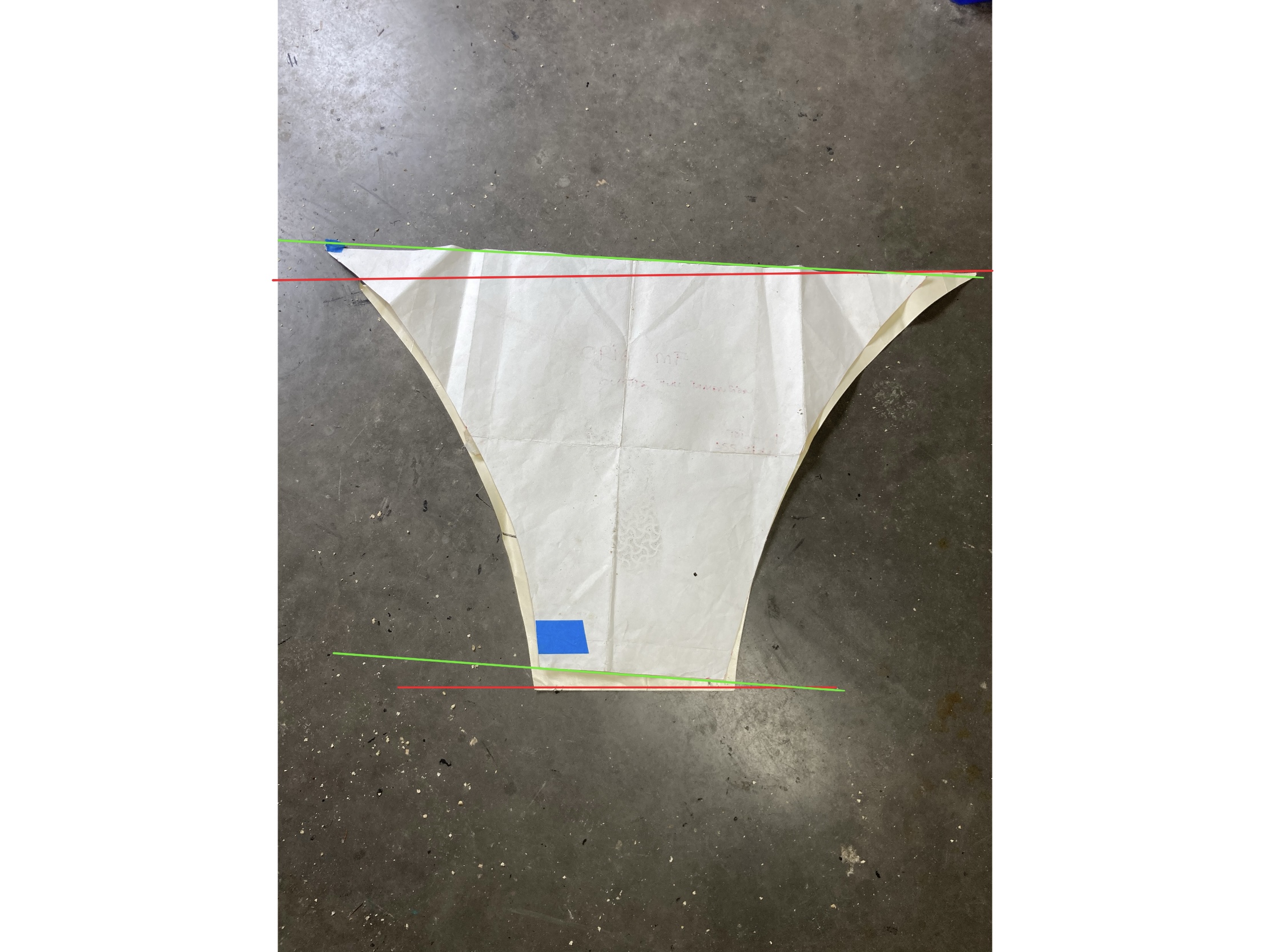
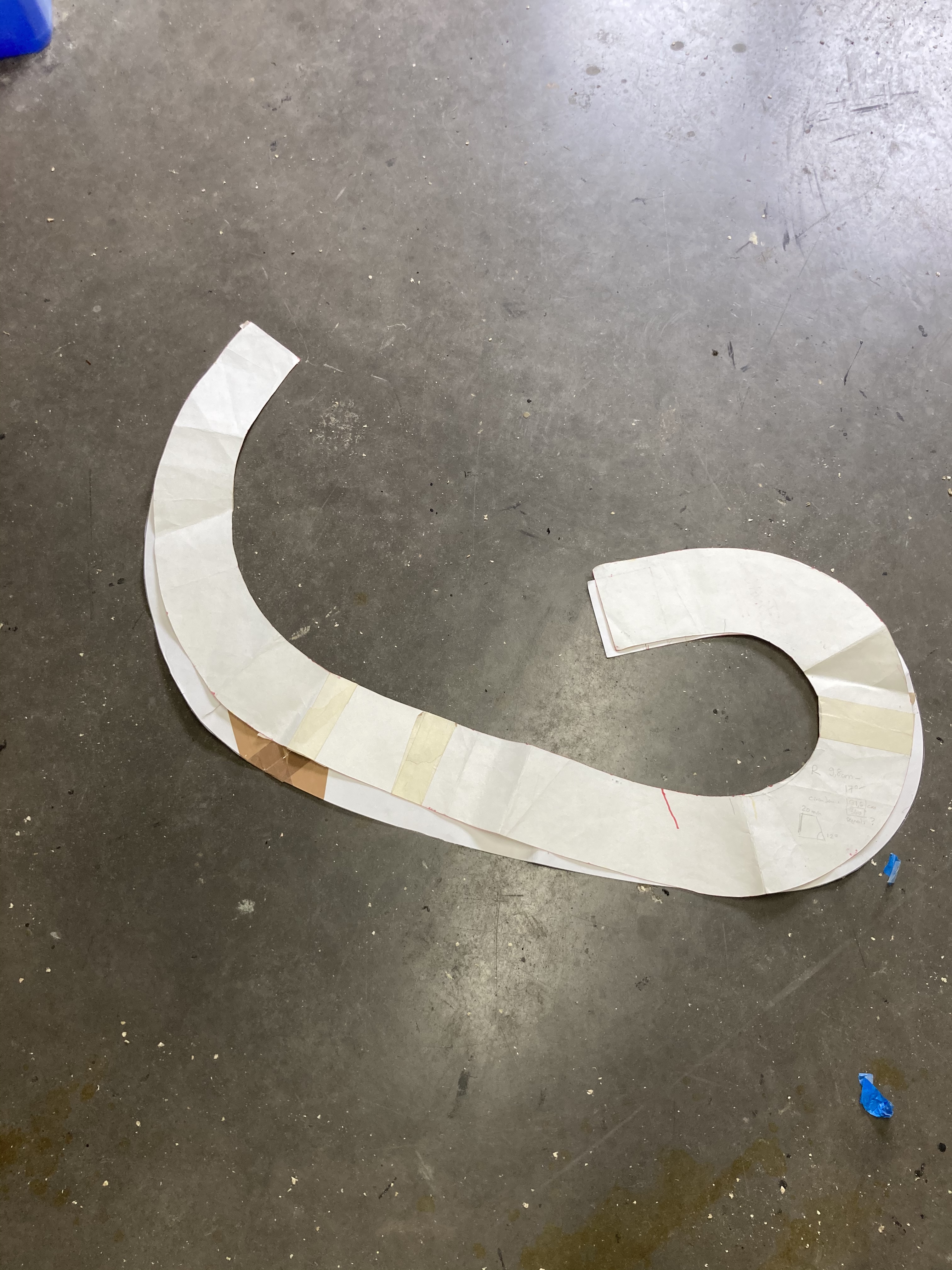
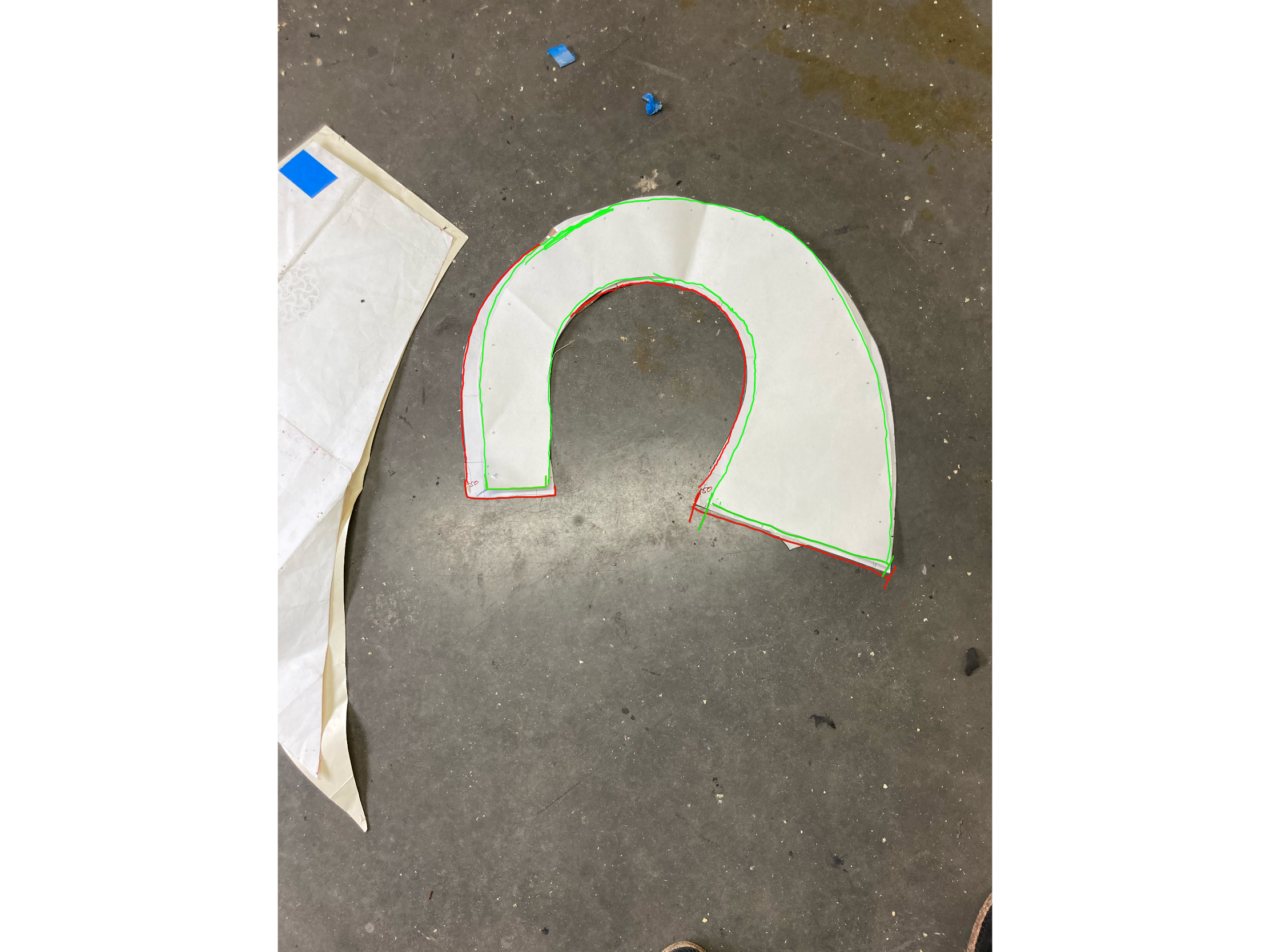
So… below is an example of some replica WE13a sections compared to the original patterns. The mismatch is, frankly, impossible to miss. In fact, they don’t match at all. Lateral, horizontal, vertical—you name the plane, it’s wrong.
And just to round things off nicely, the exponential expansion is wrong as well. Which is slightly inconvenient, since anyone with even a passing interest in horn science knows that the expansion law is not a decorative suggestion—it’s the entire foundation of the design. Get that wrong and everything downstream politely follows it off a cliff.
But hey, if the goal is to produce something that resembles a 13a from across the room, then mission accomplished. Measurements, physics, and acoustics can always be dealt with later. After all, it’s all part of the fun. However “Only the original reveals the limits of the copy.”
Here we are, faced with patterns that have clearly drifted away from the blueprint. It’s a curious reminder that precision without the correct reference is still just precision applied to the wrong thing.
But hang on… do these “estimated” copies—with all their creative variations from the original—actually alter the sound of this wonderful horn?
Well, as it happens, I’ve built them. I’ve measured them. I’ve tested them. And I’ve listened to both the approximate and the original shapes. So yes, I do have my answer to that question.
But… am I the only person on this planet who’s gone to that trouble? Who knows.
Go on, folks—have a good guess!
Interestingly, the tolerances specified by Western Electric were quite clear: 1% for the wooden sections, and for the cast-iron throats, “as close as commercially possible.” So yes, a certain level of deviation was tolerated—but certainly nothing on the scale of the variations I’ve witnessed in some replicas.
Which naturally leads to the question: can we assume that some of these so-called replicas are based on the crude drawings circulating online? A quick trip to Google and a search for “13a” will reliably produce those rough side-section sketches. It’s therefore not especially surprising that one horn presented as a 13a replica happens to match that drawing—at least in its lateral planes.
But seriously—why go to the trouble of building such a complex horn, only to fall short on the very principles that led to its creation back in the 1920s? Was it a matter of convenience? Lack of understanding? Or simply money?
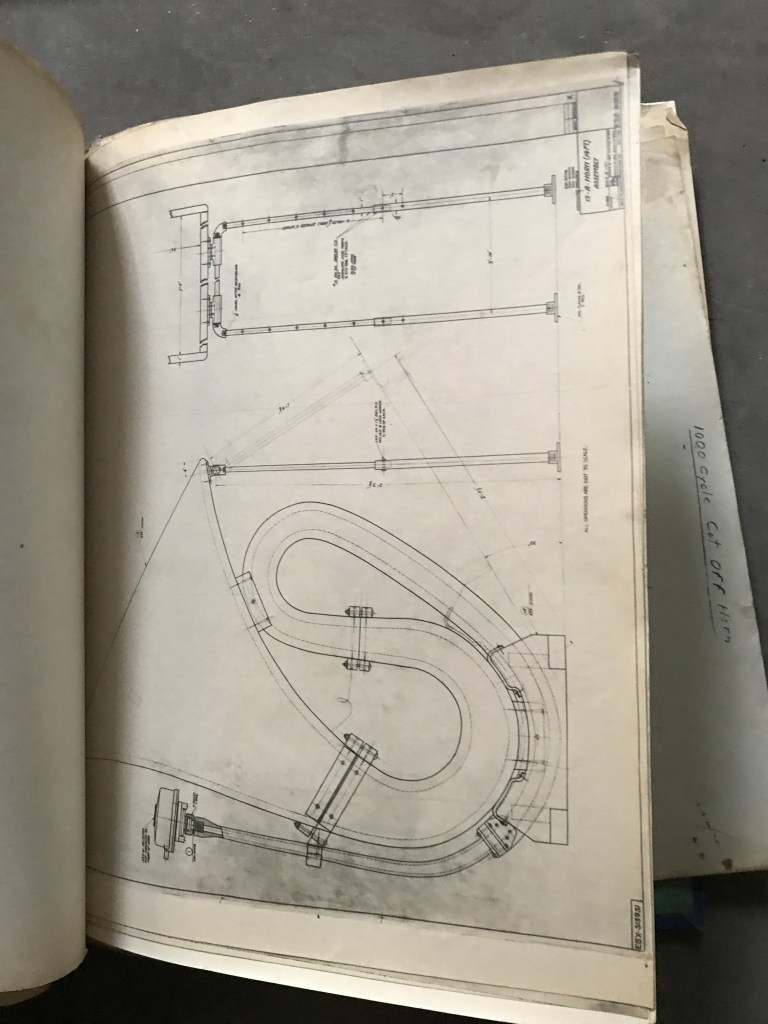
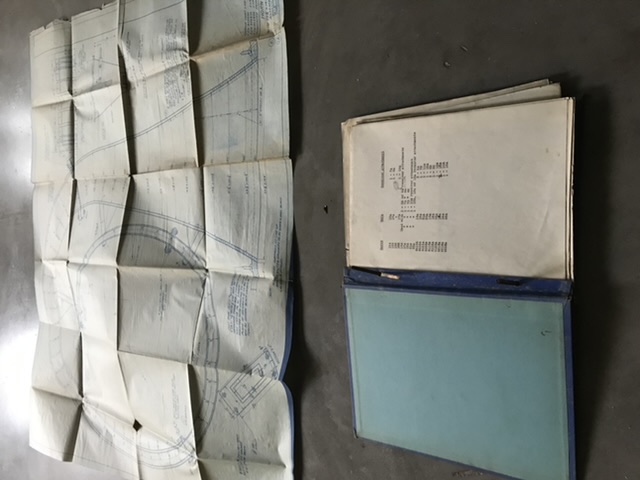
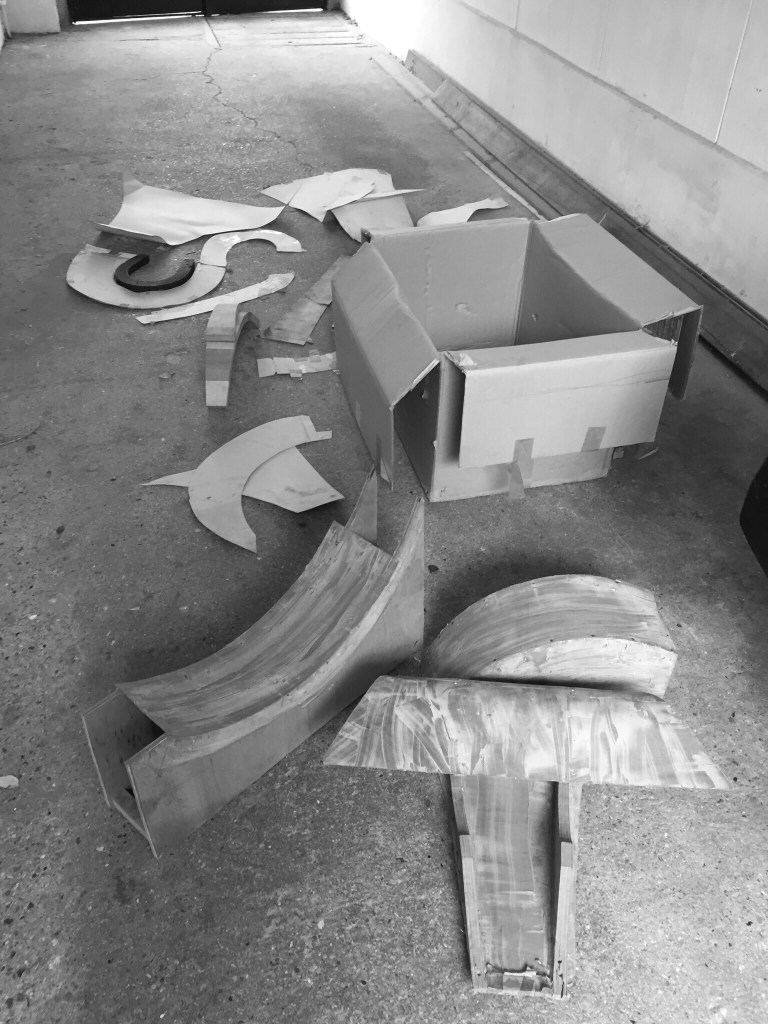
If you’ve read my writings here, you’ll have probably gathered that I focus obsessively on the original design. Why? Well, firstly, it’s simply my thing.
But there’s more to it. The 13a was designed and developed back in the 1920s by some of the very best audio engineers of the time—people given serious budgets, access to resources, and, most importantly, time. Lots of it. Money, manpower, research… the whole lot.
Fast-forward to today, and somehow a few individuals—with rather more limited competence, resources, time, and money—manage to self-proclaim themselves horn “experts,” confidently announcing that they’ve perfected the design or “tuned” it. Really?
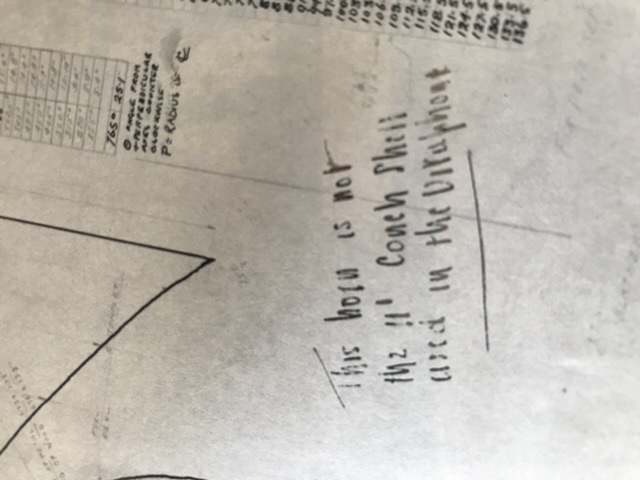
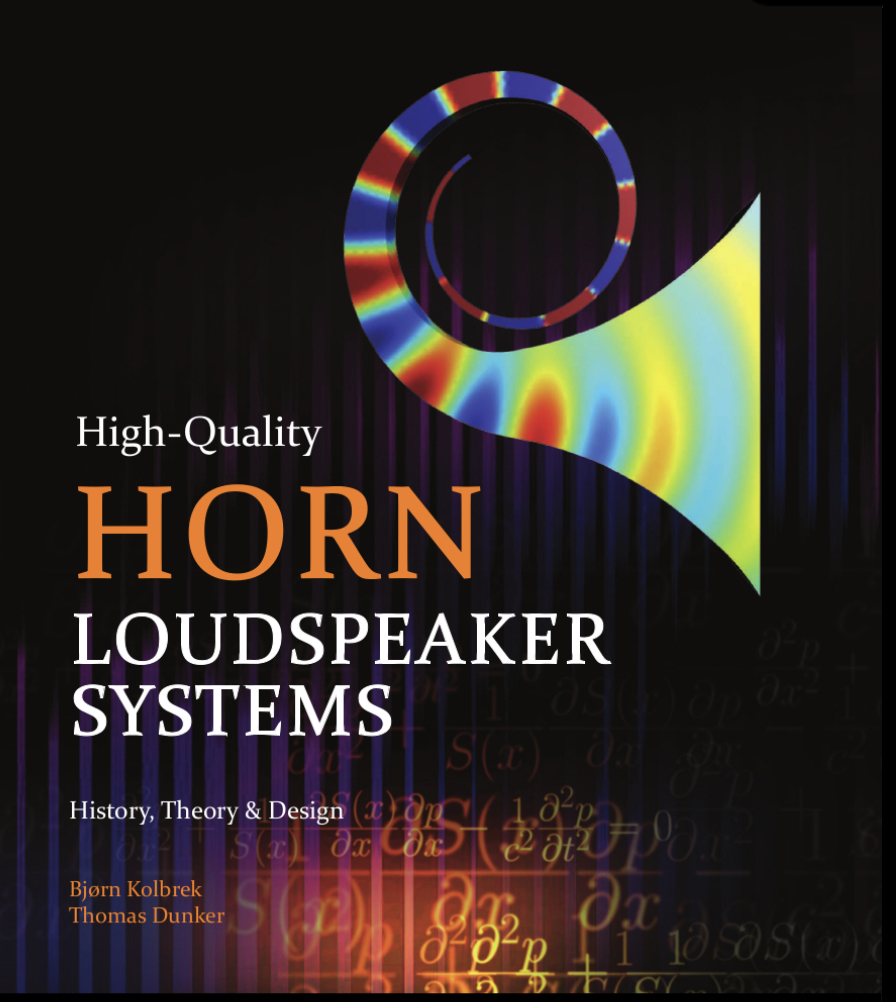
You can read the true story in this wonderful book. And once you’ve mastered everything there is to read, thought it all through, and still believe you can better something that was designed, built, and exhaustively tested nearly a century ago—then it’s time to write your own book. Or better yet, build the horns, prove it, and become famous.
Or simply say it plainly: that you’re seeking something different. After all, we all know that absolute and perfection are notions that don’t sit very comfortably in the audio world. The sheer diversity of approaches and variations on display at shows like the Munich High End show (soon to be Vienna ) are proof enough of that.
But… good luck on that journey.
Yes, that’s the real issue: getting your hands on the original drawings. Western Electric didn’t publish them. And really—why would they? Did they want everyone copying their designs? Of course not.
The 13Audio 13a jigs are officially worn out. They’re good for about 15–20 builds, and they’ve done their duty. Time to remake a full set, because what’s coming next is a no-compromise installation.
Another project on the move.
“C” is fully committed to getting it right—and, more importantly, trusts me to achieve that goal together with him. Thanks, C.
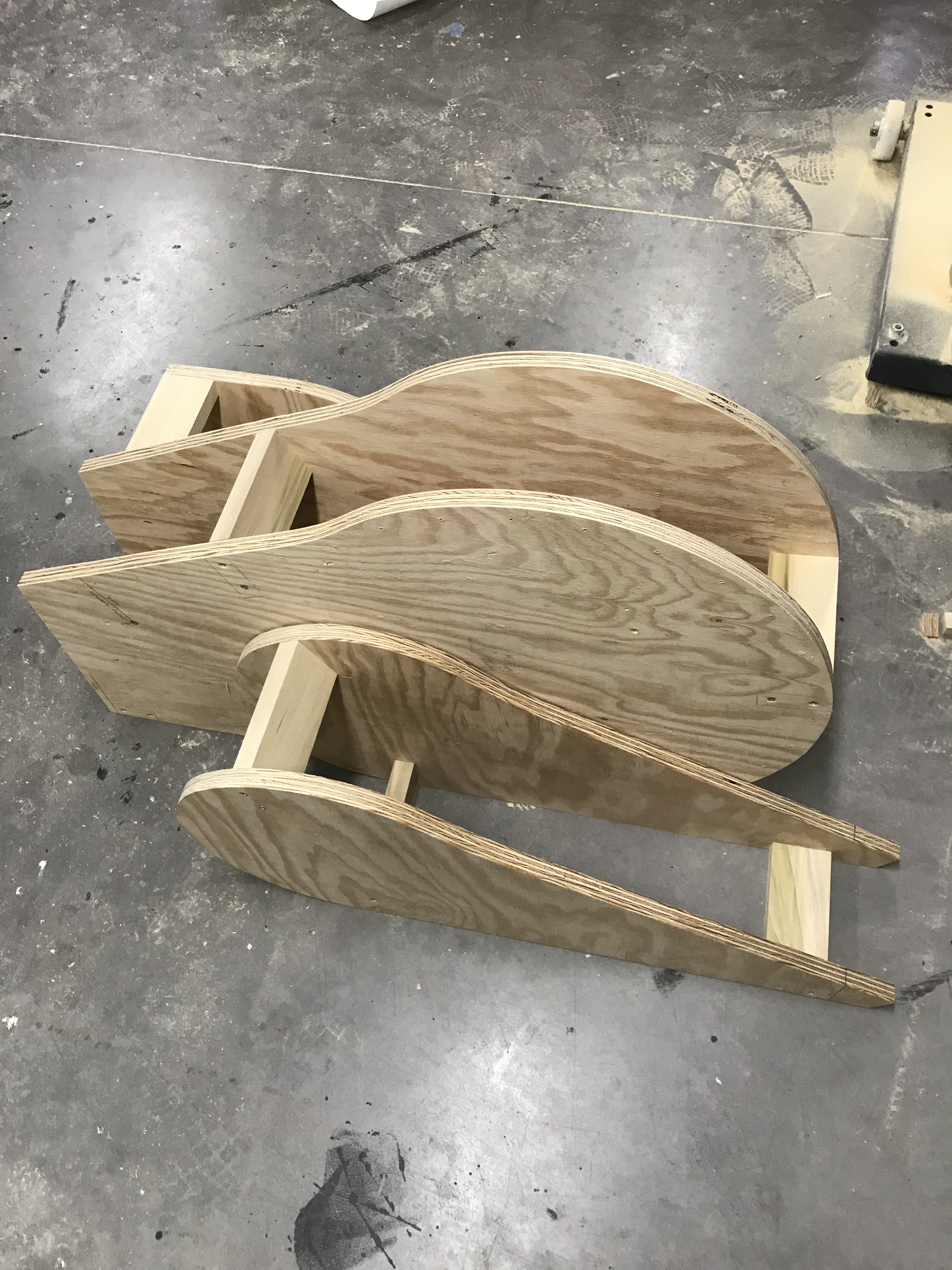
I’ll be making new jigs over the coming weeks. They take time, and as always, I’ll be double-checking everything to ensure the original expansion and shape are exactly as they were meant to be. This is a critical step—one that simply does not tolerate shortcuts.
Here, the original blueprints are invaluable. In fact, they’re the only way to achieve that goal.
Taking the blueprint and expansion dimensions of a horn and translating them into actual jigs—and then into the final, finished horn—takes skill and experience. Perhaps that’s yet another reason why some so-called replicas are, at best, almost correct.
I do this the way it was done so many decades ago: full-scale drawings, plotting every detail, and anticipating the build and craftsmanship required to bring it all together. No eyes riveted to a screen, no CAD models. Numbers aren’t really my thing—it’s all about authenticity in my world.
I’m anchored in slow craft, not fast craft.
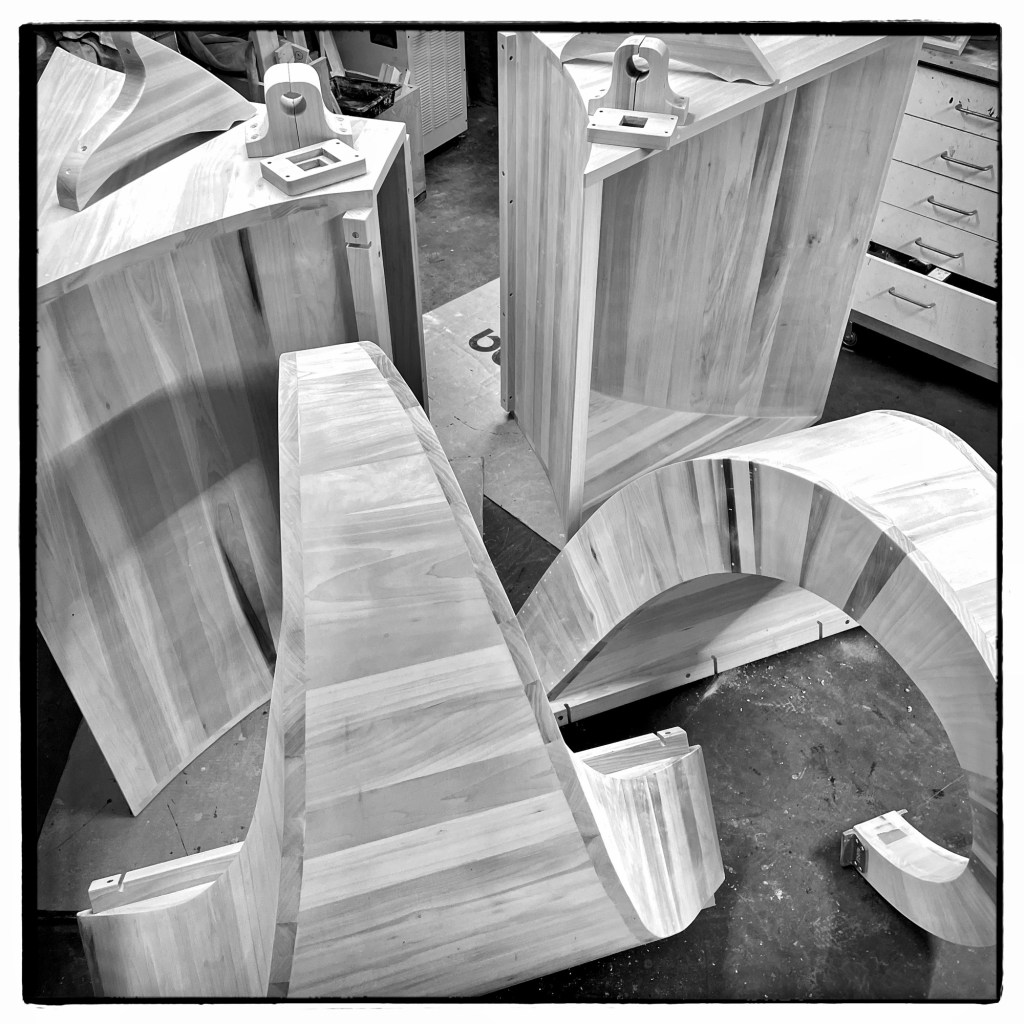
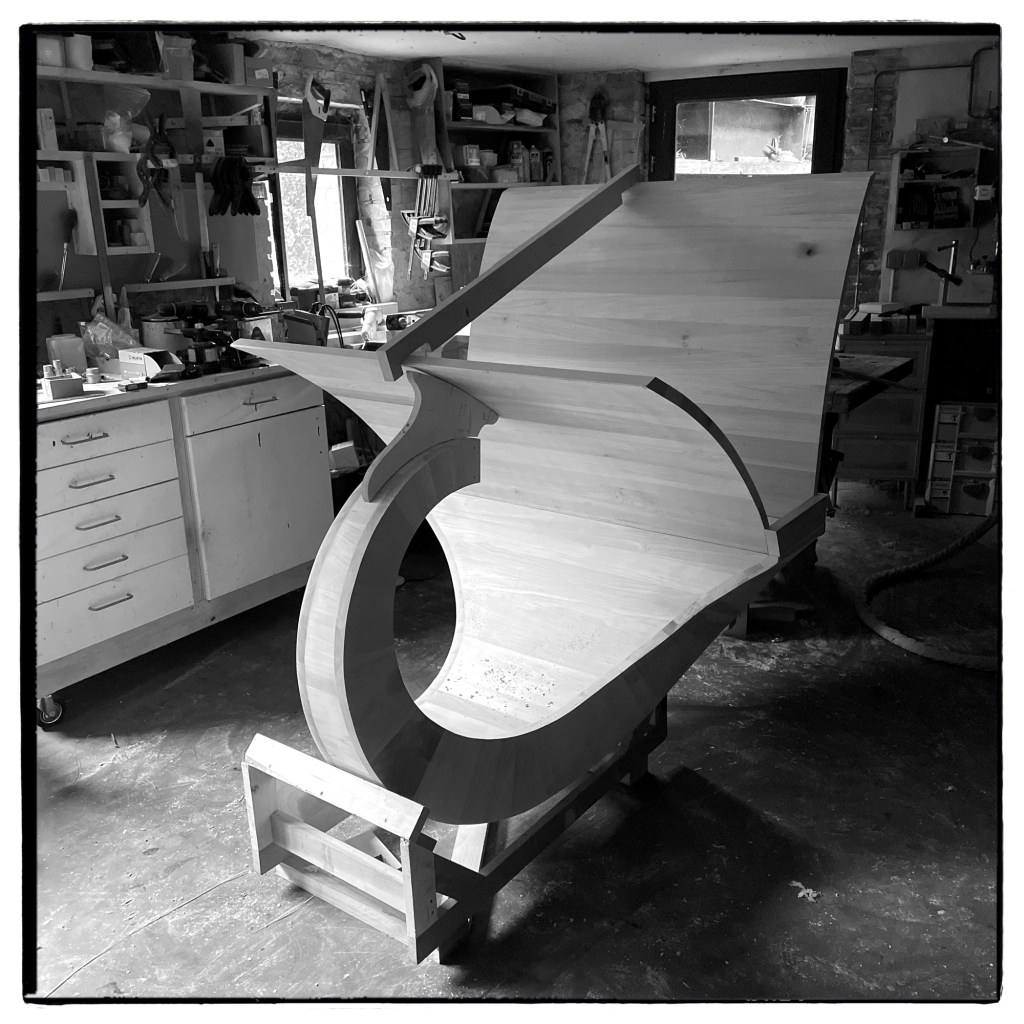
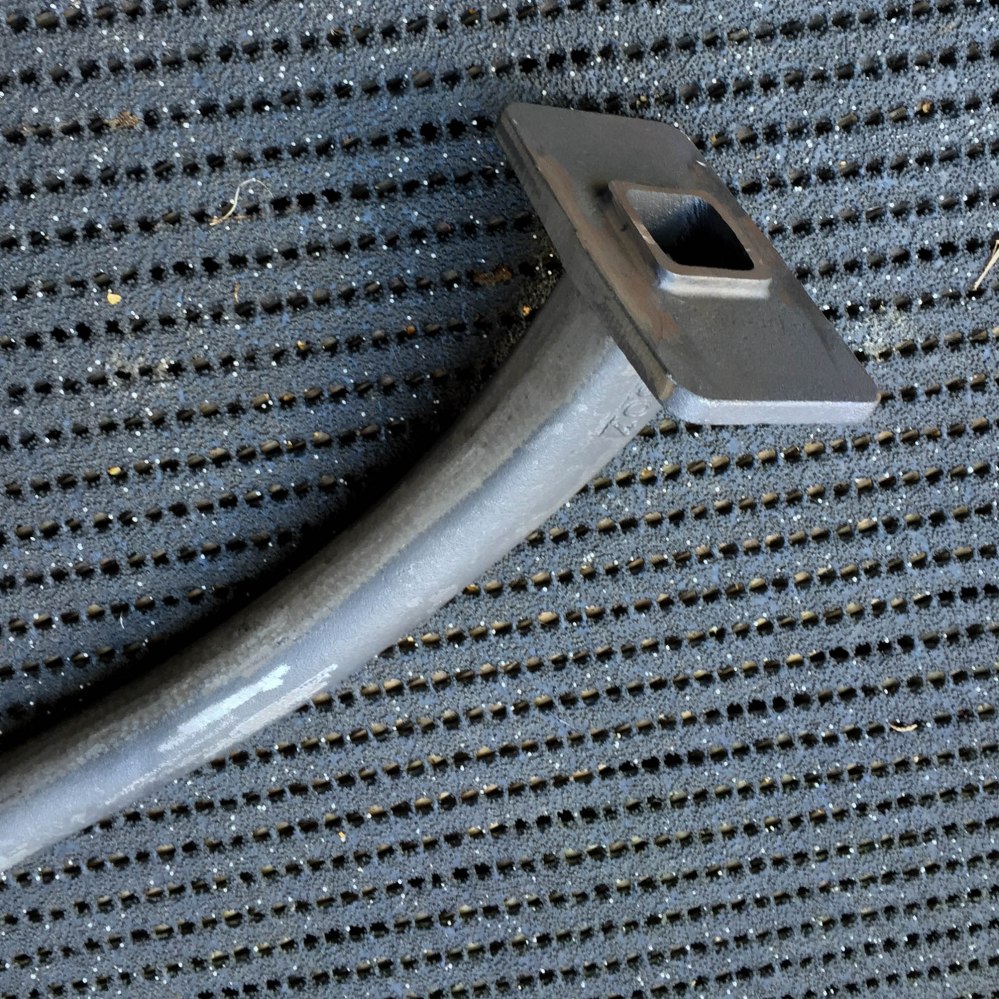
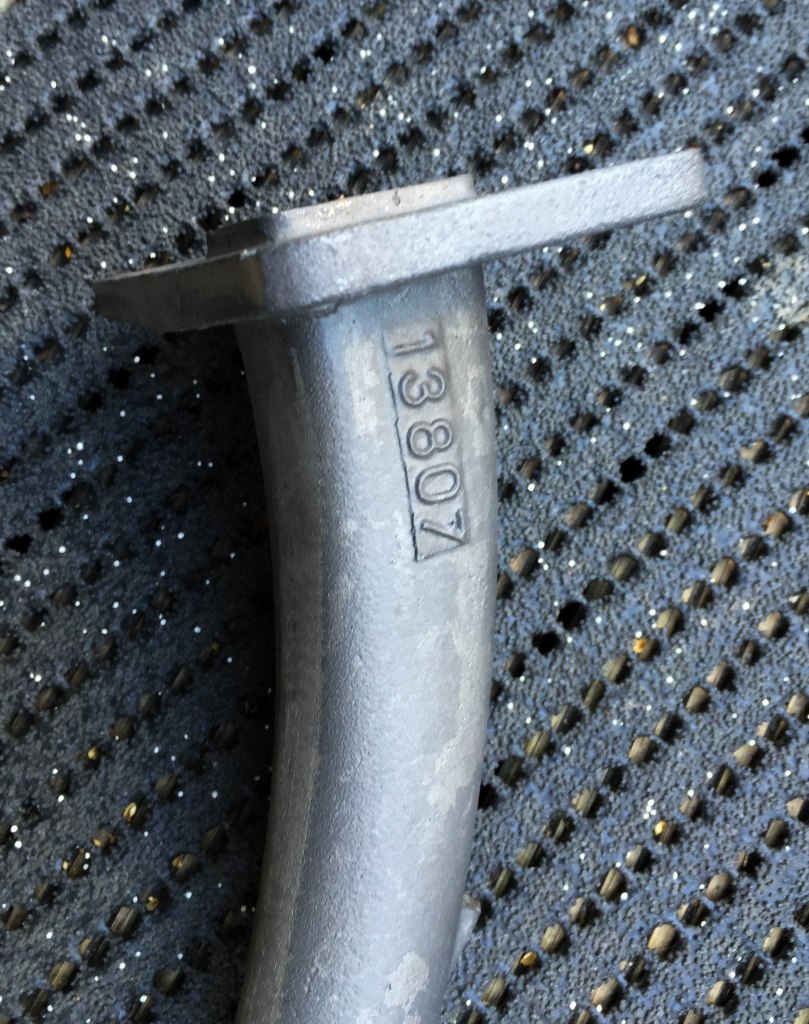
Beyond all these questions of dimensions, there’s also the matter of craftsmanship. Anyone who has seen an original can tell at a glance that the craftsmen truly knew how to shape wood—not twisting it, not bending or laminating it into submission, but cutting, carving, and bringing form out of solid wood. There’s a deep understanding at work, where theory and material meet, and where the design on paper is fully respected in the material world.
Anyone being less attentive in the craft is, in effect, telling us how much care has been applied, and that level of care inevitably carries through to the truth of the form itself. As we can witness on the originals, this holds true. The rest is for others to judge—what I execute, from blueprint to final horn—so scrutinize the craftsmanship. Lame copies cruelly shine with the amateurism employed during building techniques.
The 13Audio craft level required to build a 13a lands at a solid 8 out of 10 on the build-challenge scale. It’s demanding, time-consuming, and completely unforgiving if you try to rush it. Every step requires forethought, precision, and respect for the original intent. This is not something you casually squeeze in between other projects—it asks for full attention, patience, and a clear head.
Now… the solid wood WE16a is in a league of its own. That one comfortably tips the scale at 10, and on certain days—depending on the wood, the humidity, and your level of optimism—it might even creep up to 11…At that point, you’re no longer just building a horn; you’re engaged in a long-term relationship with the material. Wood movement, internal stresses, tooling limitations, and sheer physical scale all conspire to keep you humble. This is where I get my fix.
Nothing about these builds is fast, automated, or forgiving. They demand experience, intuition, and a willingness to redo things until they are right—not “good enough.” That’s precisely why shortcuts don’t belong here, and why this kind of work remains firmly rooted in slow craft. The reward, of course, is knowing that what finally stands in front of you is the result of skill, persistence, and respect for a design that never deserved to be rushed in the first place.
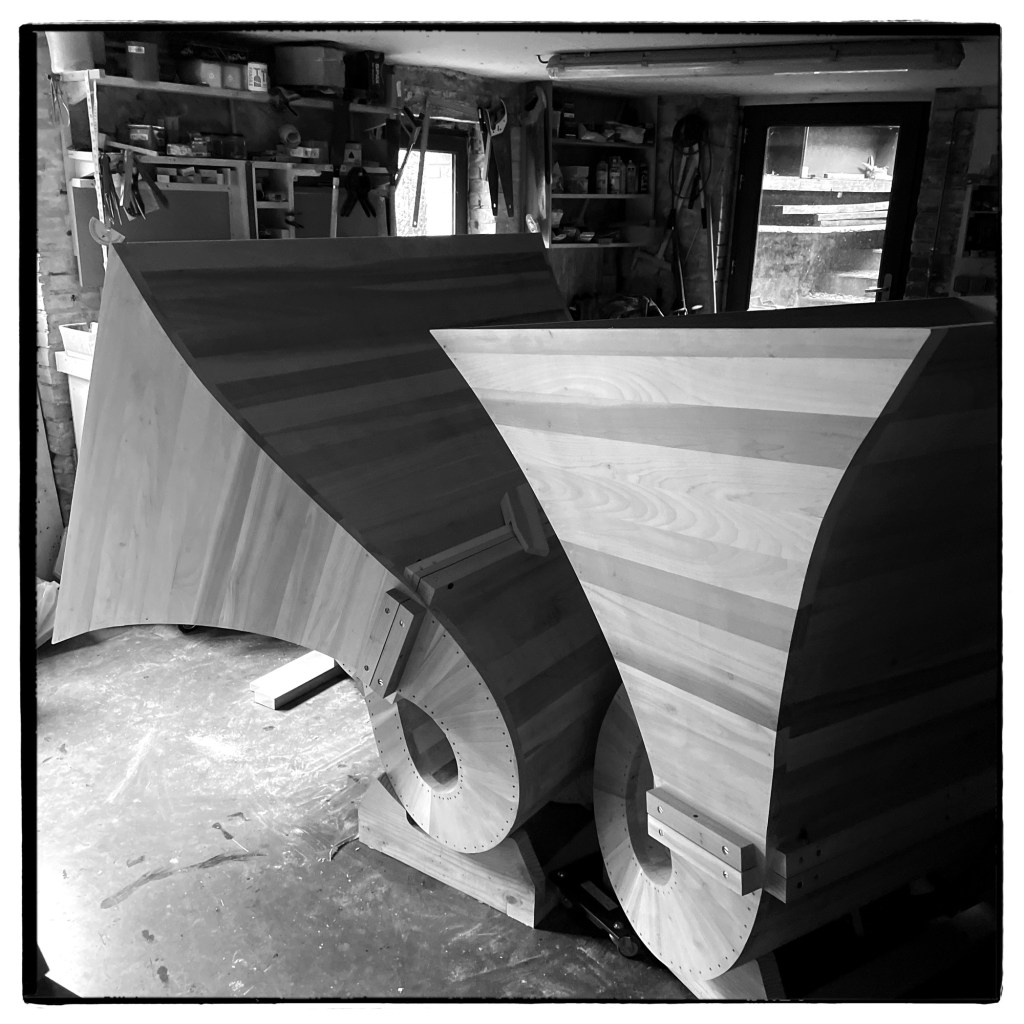
That said, I’m not making any more solid wood WE16 horns—with two… maybe exceptions. Those were already spoken for and committed, both for my very good friend “D.” One may end up installed in his medieval château, and the other will live in the Big Apple, the hometown of my wonderful wife—and fittingly, close to where the very first solid wood Western Electric horns were originally made.
Two very good reasons to make an exception… or perhaps exceptions.
So, “L” can’t have it all. The “maybe” for L was a maybe, and that’s exactly what it was. Instead, he’s trusting me with another adventure: the reincarnation of yet another mythical Western Electric horn. Which, inevitably, means more jigs ahead and another exciting chapter in my journey—one shared with friends for whom authenticity ranks very high on the scale of values.
For the record, thanks “L,” who happens to be the (very…) lucky man in this whole story.
All fun…

