Bass perception is already a carefully constructed illusion, but treble turns it into a full-scale magic trick — and the challenge becomes even greater with high-efficiency horn systems such as Western Electric. Our ears and brains never judge bass in isolation. They rely heavily on timing cues, harmonics, and transients living higher up the spectrum. Get those right, and bass suddenly feels faster, tighter, and more convincing, without adding a single extra hertz.
Long air-column horns complicate things further. The midrange takes the scenic route through a long horn, while bass and treble often arrive by the shortest possible path. Same speed of sound, different departure gates. To the ear, this doesn’t sound like “delay” — it sounds like the band isn’t quite agreeing on the downbeat.
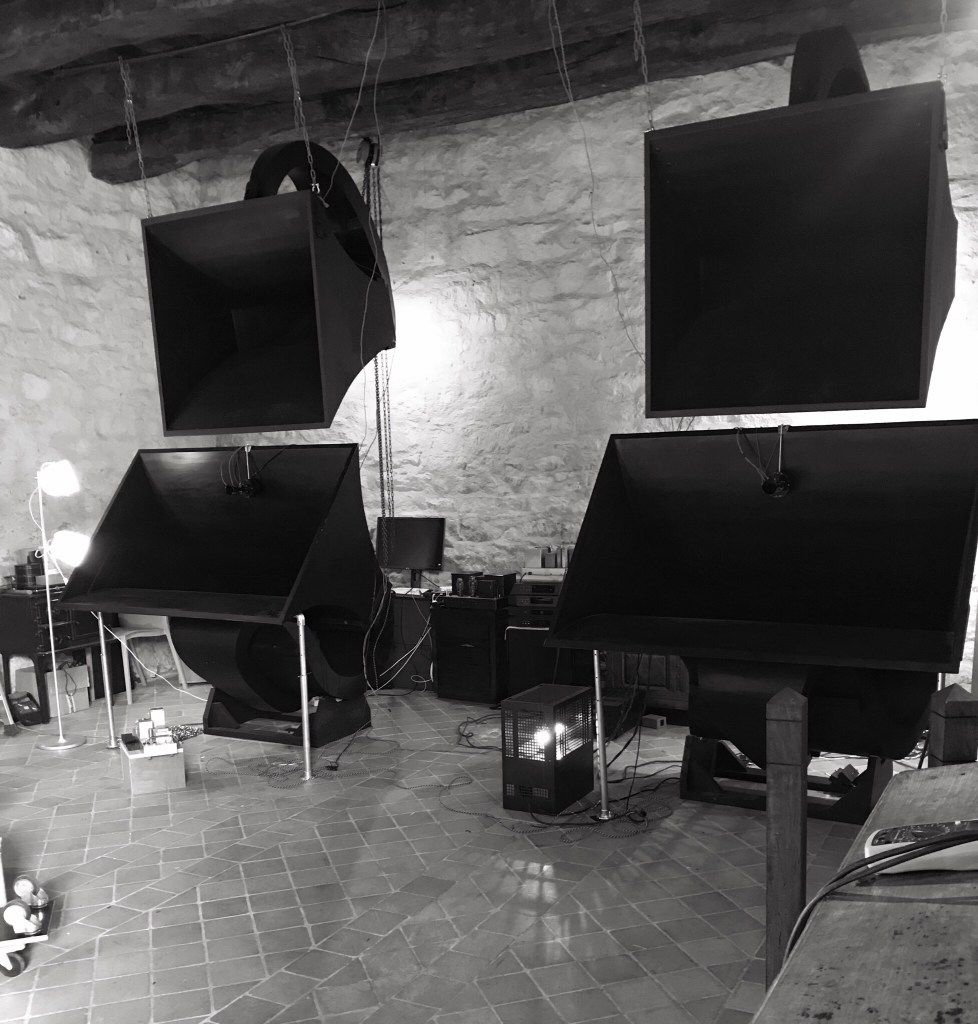
Interestingly, Western Electric knew this very well. Their documentation goes into remarkable detail about time-aligning the 12A and 13A horns, which do not share the same air-column length. The solution? Move the horns back and forward, guided not by instruments, but by the listener’s own perception. Even better, they recommended using a speech recording as the alignment reference. Perfectly logical — speech exposes timing errors mercilessly. The funny part? At that time, there were no bass units and no tweeters involved. And yet, they already understood how critical timing was. They may not have had subwoofers or super-tweeters, but they absolutely knew that sound arriving together is what makes music believable.
All fun…
 13Audio